Newsletter Subscribe
Enter your email address below and subscribe to our newsletter

 ByJohn A
Virtual production fuses live-action capture with real-time CG and simulation, delivering a single feed that unifies camera data, tracking, and illumination. The goal is rapid iteration, collaborative decision-making, and tighter budgets through modular, interoperable tech and low latency pipelines. Success rests on aligned aims, disciplined validation, and transparent asset pipelines, guiding a flexible yet reliable path from capture to composite. The framework promises scalable control, but its true test lies in how teams converge on benchmarks that unlock the next scene.
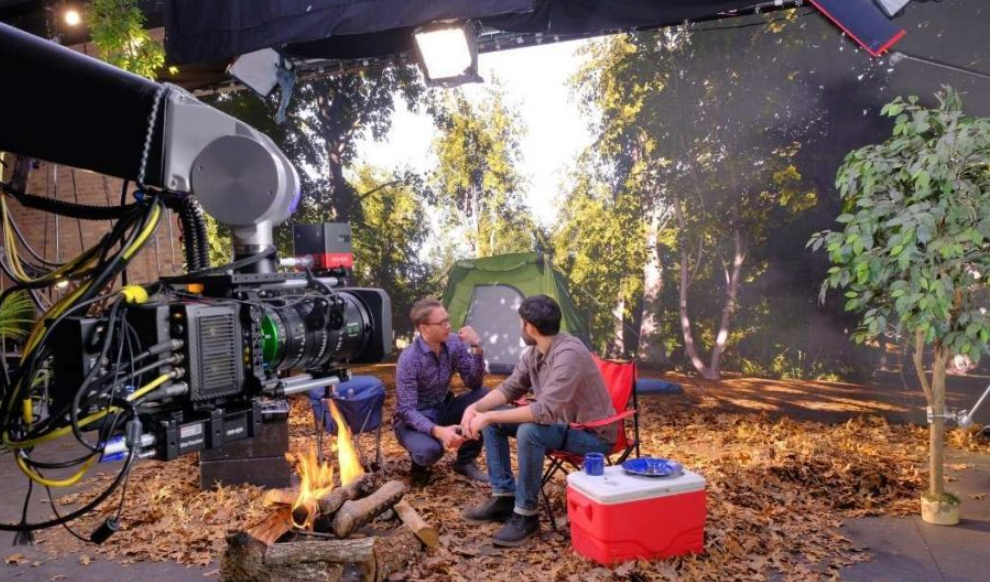
Virtual Production is a method that integrates live-action capture with real-time computer graphics and simulation to create, preview, and adjust scenes before final compositing.
It reframes filmmaking as a collaborative system where dramatic lighting informs composition, budget constraints guide scope, virtual production reality accelerates decisions, and editorial workflow converges with previsualization, camera tracking, and real-time feedback for precise, liberated storytelling.
See also: What Is a Crypto Hash and How Does It Work?
How do the moving parts of a virtual set synchronize to deliver real-time results? The tech stack merges real-time rendering, tracking, and camera data into a cohesive feed, enabling seamless compositing. Workflows are modular, enabling rapid iteration. Choosing workflows ensures alignment across teams, while Equipment interoperability guarantees plug-and-play efficiency, reducing latency and error margins in production pipelines.
Selecting the appropriate studio setup hinges on aligning infrastructure, workflows, and latency targets with production goals, ensuring a cohesive path from capture to composite in real time.
A visionary yet precise approach evaluates camera capabilities, processing power, and display fidelity, balancing flexibility with reliability.
Lighting budgets and space optimization emerge as levers, shaping room design, device placement, and future extension without constraining creative freedom.
Common pitfalls often arise from misaligned expectations between creative aims and technical constraints, making early governance and disciplined validation essential. The discussion outlines practical tips for success: establish iterative benchmarks, maintain transparent asset pipelines, and document decision rationales.
Adopt an unrelated topic mindset to reframe problems, and an offbeat angle to spot hidden constraints. This disciplined freedom enables resilient, scalable virtual production workflows.
Lighting design, real time rendering, and more: virtual production creates roles in previsualization, camera supervision, on-set technical direction, LED wall management, compositor work, motion capture coordination, and pipeline engineering—offering creative freedom within a visionary, technically precise framework.
Budgeting for small teams shows variability, but costs can scale from affordable rigs to modest budgets. The approach threads tools and workflows for indie productions, emphasizing flexibility, scalability, and freedom as creativity meets practical resource constraints.
The best cameras for real-time capture prioritize sensor reliability, latency, and integration; camera selection shapes data pipelines, standards and protocols, enabling fluid workflows. In vision, they empower creators seeking freedom, delivering pristine images for immersive virtual production ecosystems.
Virtual production cannot entirely replace on-set crews; it redefines roles. It shows how virtual production changes workflows, shifting responsibilities toward real-time integration, lighting, and data management, while preserving human collaboration and creative decision-making within an empowered, freedom-seeking workflow.
Answer: In the field, 87% of breaches occur due to weak defenses, guiding practices that emphasize privacy protocols and data encryption. The system envisions resilient architectures, enabling creative freedom while safeguarding sensitive IP against unauthorized access and leaks.
Virtual production stands as a convergent backbone for modern filmmaking, uniting capture, CG, and lighting into a single, responsive workflow. Its promise lies in unprecedented iteration speed and collaborative clarity across departments. An intriguing stat: studios reporting a 30–40% reduction in post-viz time after adopting real-time pipelines underscores the efficiency delta. When aligned with disciplined validation and transparent asset pipelines, the approach scales from indie shoots to tentpole rigs, shaping a future where virtual and practical worlds fuse seamlessly.